The Biotech CEO's Guide to Managing Trump

Updated: Jan 16

January 15, 2026 - New York, NY
As Healthcare Insights' 2026 Opening Story, written by Editor-in-Chief Param Malik, we felt it imperative to depart from our traditional coverage. We believe a fundamental transformation is underway, one that demands a deeper, more rigorous interrogation of the relationship between capital, science, and the state. Read more on our values at healthcarein.org/standards.
For seventy years, the American biotech industry operated under the quiet liturgy of the scientific method, incremental regulation, and the predictable gears of federal health agencies.
That reliable, if at times staid, era of incremental legislative shifts and predictable patent cliffs has been replaced by a sovereign interventionism not seen in a century, where a single executive signature carries more weight than a decade of clinical data.
As we navigate the opening weeks of 2026, the biotech sector finds itself in a paradox: valuations are surging, M&A is rebounding toward a projected $200 billion year, and yet the very foundations of the industry’s scientific and capital models are being re-engineered by executive decree. For many discerning businesses, the mandate has shifted from managing risk to managing whim.
The 2025 Retrospective
The administration’s inaugural year was defined by a rapid-fire dismantling of global health norms in favor of a fiercely transactional, "America First" biopharma policy. Wall Street, initially paralyzed by the unpredictability, has begun to price in the Interventionist Premium, recognizing that political alignment, not merely scientific merit, now underpins market valuation.
The defining characteristic of the past twelve months was the administration's aggressive use of Section 232 tariffs and Most-Favored-Nation (MFN) pricing as leverage. Rather than broad legislative sweeps, the White House favored a "one-by-one" negotiation strategy.
A few highlights:
The MFN Executive Order: By tying Medicare Part B and D pricing to the lowest prices in peer OECD nations, the administration forced major players (most notably AbbVie, Eli Lilly, and Sanofi) into voluntary price-cap agreements. By the end of 2025, over 14 major pharmaceutical companies had signed such "voluntary" agreements to match the lowest prices in developed nations for Medicaid and TrumpRx sales. In exchange, participating companies were to receive a three-year exemption from potential tariffs and committed to investing in U.S. manufacturing, creating a bifurcated market where "deal-makers" receive regulatory fast-track vouchers while "holdouts" face aggressive pricing enforcement.
TrumpRx and Direct-to-Consumer (DTC) Shifts: The launch of the TrumpRx platform has effectively disintermediated portions of the PBM (Pharmacy Benefit Manager) stack, allowing manufacturers to sell directly to patients at "MFN prices" in exchange for tariff exemptions on their global supply chains. Through the Executive Order on Radical Transparency in April of 2025, the administration effectively declared war on PBMs. By incentivizing manufacturers to sell directly to patients via the TrumpRx platform, the White House has forced a realignment of the gross-to-net spread.
Tariff Arbitrage: In a move that stunned global supply chain officers, the administration imposed 100% tariffs on branded products from manufacturers who refused to commit to domestic production. This "build-or-pay" ultimatum led to landmark concessions, such as AbbVie’s January 2026 pledge of $100 billion in U.S. manufacturing investment to secure tariff exemptions. Domestic manufacturing became a survival imperative. The administration imposed tariffs of up to 104% on Chinese APIs (Active Pharmaceutical Ingredients), forcing a frantic, multi-billion-dollar re-shoring effort that has redefined capital expenditure for 2026.
The FDA’s New Architecture
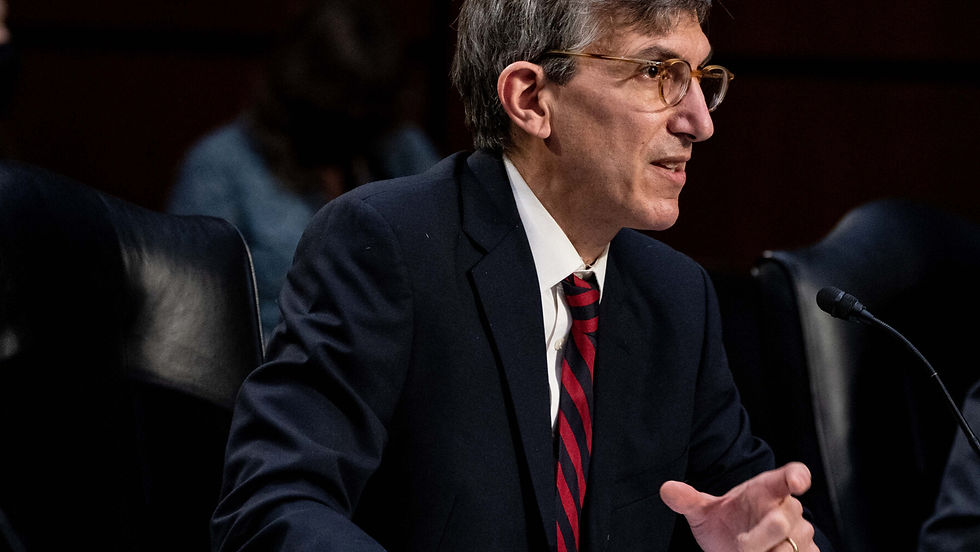
The "firewall" between political strategy and regulatory science has been breached, according to outgoing agency veterans, including FDA Director Peter Marks and former Commissioner Dr. Robert Califf. In its place is a more "flexible" FDA that prioritizes speed and AI-driven automation over traditional clinical rigor.
National Priority Vouchers: Companies aligning with administration goals, such as re-shoring API production or tackling "national security" health threats, are being rewarded with vouchers that guarantee a 90-day review cycle.
AI-Native Regulation: 2026 will see the full-scale deployment of internal FDA AI systems designed to automate the review of CMC (Chemistry, Manufacturing, and Controls) data, potentially shaving months off the approval timeline for domestic manufacturers.
Under the leadership of Commissioner Marty Makary, the FDA in 2026 has transitioned from a neutral arbiter of safety to a strategic engine of "National Health Security." The defining shift is the Commissioner’s National Priority Voucher (CPRV) pilot program, effectively commoditizing regulatory speed. Companies that align with administration goals, specifically ones re-shoring Active Pharmaceutical Ingredient (API) production or developing therapies for "national security" health threats, are rewarded with vouchers that guarantee a 90-day review cycle. This has created a new class of Super-Accelerated approvals where the regulatory premium is traded for industrial compliance.
And by leveraging internal LLMs to parse thousands of pages of manufacturing validation, the agency has subtracted an average of four months from the approval process for domestic manufacturers. For the CEO, the message is clear: the fastest path to market is no longer just through superior data, but through a domestic-first manufacturing footprint.
For further information on and official statements from the United States Food & Drug Administration (FDA) on these matters, visit fda.gov.
Capital Flows
Capital is no longer borderless. Investors in 2026 are increasingly shunning companies with "exposed" Chinese supply chains or heavy reliance on European R&D centers.
The M&A Rebound: Analysts at EY and PwC are tracking a rebound toward a $200 billion M&A year, but the deal-making is highly selective. The premium is being placed on "clean" assets, firms with U.S.-centric IP and manufacturing that are immune to the 100% "Interventionist Tariffs" applied to foreign-made patented drugs.
VC Pivot: Series A and B funding has pivoted. The 2026 Patriot Fund model prioritizes startups that integrate AI discovery with immediate, local manufacturing scalability. Venture capital is no longer just funding a molecule; it is funding a domestic fortress.
Beyond the Ledger: The Cultural and Structural Re-Engineering of 2026
While tariffs and pricing dominate the headlines, the true story of 2026 lies in the quieter, more permanent shifts to the sector’s human and technological infrastructure. For businesses in the space, these non-financial variables have become the most significant predictors of long-term viability.
The administration's deterrent immigration posture has created a critical friction point for the biopharma workforce. As restrictive visa policies sweep up technical workers, the very engineers and nurses needed to staff the $100 billion domestic manufacturing boom are in limited supply. Larger companies are responding by investing in sovereign talent pipelines, partnerships with domestic universities to grow a "Made in America" scientific class.

There’s an increasing push for nationalized bio-data. The administration is eyeing the creation of a centralized, government-controlled genomic database. For CEOs, the challenge is maintaining proprietary IP while satisfying the state's demand for data transparency in the name of national security.
Finally, the judicial system’s Chevron Deference, with regard to administrative law and the FDA, is effectively a thing of the past. In 2026, the courts are far less likely to defer to the FDA's scientific expertise, meaning every regulatory decision is a potential legal battle.
Looking Ahead
The era of the "unpolitical" biotech executive has met its definitive end. In the cold light of 2026, the sector’s most successful leaders have accepted a difficult truth: the laboratory is no longer a sanctuary from the state. The interventionist premium is the new tax on innovation, and Trump’s whim is the new gravity of the market.
Wall Street, once allergic to such volatility, has surprisingly rewarded those who play the game. The agile opportunist is thriving, trading the slow, peer-reviewed predictability of the past for the high-velocity, deal-driven momentum of the present. They have learned that in an era where a single executive order can re-route a global supply chain or dissolve a pricing framework, the most valuable IP isn't a molecule; it is the ability to pivot.
The most interventionist president in a century has forced a marriage between the Corporate Boardroom and the Situation Room. And for those who can master this new language of transactional science and nationalized capital, the rewards are historic.
Read more about the impact of federal research funding cuts on the future of medicine and learn about the most anticipated drug launches of 2025.
Further Reading:

If you liked this article:
Share this article with your network on LinkedIn with your thoughts or perspectives. Make sure to tag us @HealthcareInsights to join the conversation.
Subscribe to our free newsletter, HealthcareIn Quicktakes. You'll never miss an article, and will get access to exclusive reports.
Check out our library of articles and reports on biotech, healthcare, policy, and business.
Who We Are: At Healthcare Insights, we're covering the transformation of healthcare and bringing our readers the most pertinent takes on key issues in medicine, biotech, healthcare policy, and business. Our Spotlight Series ✦ features thoughts from the most influential figures in healthcare, including Nobel Prize-winning scientists shaping tomorrow's treatments and business leaders bringing new therapies to market. We strive to publish coverage that is authentic, impartial, and independent of any financial or political motive. For more information regarding our editorial standards, read our statement. If you'd like to contact the Editor, use this form to get in touch.
If you'd like to stay in the loop, make sure to subscribe to our free newsletter, HealthcareIn Quicktakes, and follow us @healthcareinsights across our social channels, including LinkedIn.
©️ Copyright 2025 Healthcare Insights
All Rights Reserved
Legal Disclaimer:
The information provided in this article has been collected from various academic publications, industry reports/analyses, regulatory guidelines, media coverage, and legal analyses. The information provided is for general information purposes only and should not be construed for medical, legal, financial, or professional advice. Readers are advised to seek independent professional guidance where relevant. While we strive to ensure the accuracy and timeliness of our coverage, we claim no liability, representations, or warranties of any kind about the completeness, suitability, accuracy, reliability, authorship, or availability of this article and all pertaining data within this article. Neither the author nor the publication will assume liability for any loss or damage arising from the use of the information provided in the article. The information within this article may be outdated or inaccurate over time, and neither the author nor the publication are obligated to update or revise such information. We reserve the right to modify, remove, or substantially edit the article, including the disclaimer, at any time.


